The failure to get the right test results during a DIY test is not due to poor quality of the kits but because the test is hurried. The main reason why individuals go for DIY STI tests is that it is convenient and discrete but a slight mistake can give wrong outcomes.
The good news: an at-home STI test can be highly reliable when you follow the steps correctly. This guide covers the 8 most common mistakes, how to avoid them, and what to do if you have already made one.
What an STI testing kit actually involves
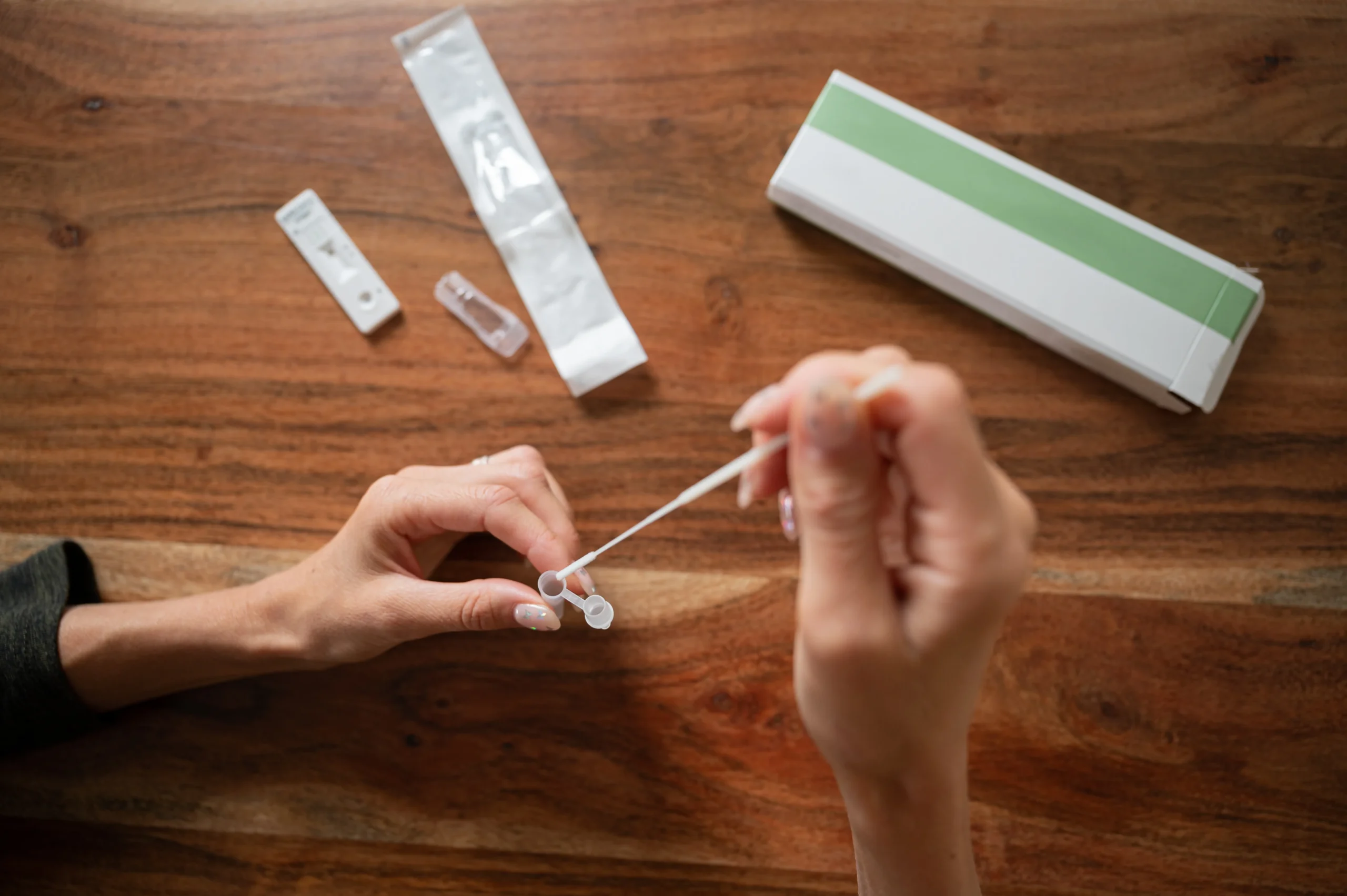
An STI testing kit isn’t just “take a test and get an answer.” It’s a mini lab process you’re doing at home, and each step affects accuracy.
Common samples (may vary per panel):
- Urine sample (usually done for chlamydia/gonorrhea)
- Swab (genital, throat, rectal, based on exposure and collection kit)
- Finger-prick blood spot (for HIV/syphilis, usually)
Why instructions matter more than people think:
- Many at-home kits use certified lab processing similar to clinics
- Accuracy is usually strong when collection and timing are correct.
Who at-home kits are best for:
- Routine screening when you feel well
- People who want privacy and control
When to go to a clinic instead:
- You have symptoms that may require an exam (pain, sores, pelvic pain, unusual discharge)
- You need same-day treatment
- You’re dealing with severe symptoms or complications

Mistake #1: Ordering the wrong kit (not testing for what you actually need)
This is the most common issue, people assume one kit covers everything.
What happens:
- You test for the wrong infections
- You miss site-specific testing (throat/rectal) when it matters
- You feel falsely reassured
Fix: read the product description carefully and confirm what’s included.
Quick checklist before you order:
- What are you trying to rule out?
- What sites do you need to test (genital, throat, rectal)?
- Do you need blood testing included?
- Does the panel match your exposure and concerns?
Mistake #2: Too early testing (neglecting timing)
Timing is everything. Many infections have a “window period” where the infection may be present but not detectable yet.
What happens:
- You test too early
- You get a negative result that doesn’t actually reflect your risk
Fix:
- Follow the provider’s timing guidance
- If exposure was recent, plan for a follow-up test window (provider-guided)
When in doubt:
Consider baseline testing now + retesting later based on guidance
That’s often the most practical, low-stress plan.
Mistake #3: Skipping the tutorial (or not reading the instructions fully)
A lot of people wing it because it “looks simple.”
What happens:
- Steps get done out of order
- Labels get mixed up
- Collection technique is off
Fix:
- Read the steps once before you start
- Then follow them in order, slowly
- If there’s a short video tutorial, watch it (it prevents the most common errors)
A two-minute review can save you a two-week redo.
Mistake #4: Contaminating the sample (hands, surfaces, or incorrect technique)
Contamination is easy to do when you’re rushing or multitasking.
Examples:
- Touching swab tips
- Setting collection items on an unclean surface
- Mixing up swabs or containers
- Using the wrong method for the wrong sample type
Fix:
- Wash your hands first
- Set up a clean, dry surface
- Open items only when needed
- Don’t touch swab tips or inside collection containers
Think “clean lab vibes,” even if you’re in your bathroom.
Mistake #5: Not collecting enough sample (especially finger-prick blood)
Insufficient sample is a common reason kits come back invalid or need recollection.
What happens:
- The lab can’t process the sample properly
- You get an invalid or inconclusive result
- You have to repeat the test
Fix:
- Take your time and follow collection guidance exactly
- Don’t rush because you feel squeamish, slow is better than redo
Troubleshooting if blood flow is low:
- Warm your hands first
- Hydrate beforehand
- Gently move your fingers/hand to improve circulation
Mistake #6: Storing or shipping the sample incorrectly
Even a perfect sample can be compromised if it sits too long or is stored incorrectly.
What happens:
- Sample quality can degrade
- Results may be delayed or invalid
Key “don’ts” (common across providers):
- Don’t freeze samples
- Don’t let the kit sit around for days after collection
- Avoid mailing right before the weekend if possible
Fix:
- Mail it back ASAP
- Follow storage instructions if you can’t ship same day
- Treat shipping like part of the test, because it is.
Mistake #7: Using an at-home kit when you should go to a clinic
At-home testing is great for routine screening, but it’s not ideal for everything.
Common scenarios where clinic care is better:
- Active symptoms (pain, sores, unusual discharge)
- Severe symptoms or complications
- You need same-day treatment or an exam
- You’re worried about a specific exposure and want immediate clinician guidance
Fix:
- Use clinics for symptomatic or complex cases
- Use home kits for routine screening when you feel well
This isn’t about “being tough.” It’s about choosing the safest path.
Mistake #8: Misreading results (or doing nothing after a positive/unclear result)
Results can trigger emotions, and emotions can trigger bad decisions.
What happens:
- People panic at a positive and freeze
- People ignore a negative even if timing was too early
- People don’t understand what “invalid” means
Fix: follow the provider’s next steps and get confirmatory guidance when needed.
Mini “what to do next” flow:
- Negative + recent exposure → retest later (provider-guided)
- Positive → seek treatment guidance promptly
- Invalid/inconclusive → contact the provider for replacement/support
What if I already made one of these mistakes? (quick recovery)
First: don’t guess. Guessing is how people end up delaying care.
What to do:
- Contact the provider for guidance or a replacement kit
- Retest if timing, shipping, or collection was off
- If you have symptoms, consider a clinic visit for an exam and faster treatment
Keep it practical: the goal is clarity, not perfection.
The bridge: combining home testing with telehealth support (high intent)
If you like home testing but want more support, this is where STI testing kits with telehealth can be a strong option.
How telehealth support can help:
- Choosing the right panel for your situation
- Walking you through instructions
- Interpreting results clearly
- Next steps: treatment, follow-up testing, prevention planning
Prevention add-on: when STI testing leads to PrEP questions
If you’re testing regularly because your risk is ongoing, it may be time to talk about HIV prevention too.
What that can look like:
- Private PrEP consultations for risk assessment, questions, and a prevention plan
- Discreet PrEP home delivery for convenience and privacy (where available), so staying consistent is easier
This isn’t a “salesy upsell.” It’s a natural next step for people who want prevention to feel simpler.
FAQs
1. How accurate is an at home STI test?
Accuracy can be high when timing is right and samples are collected and shipped correctly.
2. What’s the most common reason an STI testing kit comes back invalid?
Insufficient sample, contamination, or shipping delays are common causes.
3. Can I test at home if I have symptoms?
You can, but if symptoms are severe or you need an exam, a clinic is often the better choice.
4. How fast should I mail my sample back?
As soon as possible, ideally the same day, and avoid weekend delays when you can.
5. Are there STI testing kits with telehealth support?
Yes, some services include clinician support for choosing tests, interpreting results, and next steps.
6. Can I get Private PrEP consultations if my results make me rethink prevention?
Yes, many telehealth services offer private PrEP consults for prevention planning.
7. Is Discreet PrEP home delivery available?
In some programs and locations, yes, availability depends on provider and pharmacy options.
Take the Test, Not the Risk
A few small steps make your at-home STI test far more reliable, and if you want STI testing kits with telehealth support, you don’t have to figure it out alone.